LET THIS PAINTING
BE MY CONFESSION
ㅤCONTENT/TRIGGER WARNINGㅤㅤGRAPHIC VIOLENCE, MURDER, FAMILIAL HOMICIDE, GORE, BLOOD, BODY HORROR & MUTILATION, DISTURBING IMAGINERY, CHILD ABUSE, CHILDHOOD NEGLECT, MEDICAL ABUSE & TORTURE, BOTCHED SURGERY, SEVERE MENTAL ILLNESS, Psychosis & Dissociative Fugue, DECOMPOSITION, Psychological Horror & TraumaDEAD DOVE: DO NOT EAT
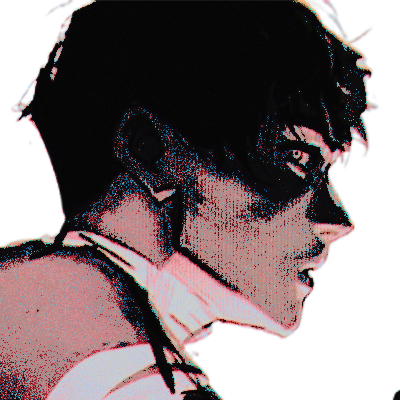
| ㅤNameㅤ | Arstyom Mikałajevič Lisovets Арцём Мікалаевіч Лісовец |
| ㅤAgeㅤ | 28 |
| ㅤSex/genderㅤ | male/cis male |
| ㅤdatebirthㅤ | december 3rd |
| ㅤplacebirthㅤ | belarus |
| ㅤstatusㅤ | alive |
| ㅤnationalityㅤ | Belarusian (previously) Korean |
| ㅤraceㅤ | multiracial |
| ㅤspeciesㅤ | homo sapien |
| ㅤheightㅤ | 194 | 6'3" |
| ㅤweightㅤ | 205 lbs |
| ㅤhandinessㅤ | ambidextrous (right-hand dominant) |
| ㅤhair colourㅤ | sable black with white streak |
| ㅤeye colour ㅤ | columbia blue |
| ㅤidentificial markingㅤ | white streak on the tip |
| ㅤoccassionㅤ | painter |
THERE'S A HOLE IN MY HEART !
Arstyom Mikałajevič Lisovets (Belarusian: Арцём Мікалаевіч Лісовец) is a Belarusian-born painter and visual artist currently residing in South Korea. He is known for his distinctive, emotionally charged style of portraiture, characterized by smudged, hazy, and blurred facial features, often rendered in stark palettes of deep crimson, charcoal black, and muted grays. Despite his growing notoriety in underground art circles of Seoul, Lisovets remains a profoundly enigmatic figure, carefully erasing any trace of his origins from public records. His work, which critics have described as "hauntingly expressionist" and "a visual representation of fading memory," draws a devoted clientele who seek to immortalize their loved ones in his singular, dreamlike aesthetic. However, his artistry is inextricably linked to a deeply fractured psyche, forged in a childhood marked by profound neglect, undiagnosed mental illness, and a harrowing history of familial violence that continues to define his perception of connection, identity, and control.
Born in a small town outside Minsk to a Belarusian father and a half-Korean mother, Arstyom was a "miracle baby" — the child conceived after his mother suffered a devastating miscarriage of a daughter who would have been his older sister. This fragile beginning, however, did little to secure his place in his family's affections. While his parents were not cruel, they were perpetually consumed by the pressures of work and survival in post-Soviet Belarus, leaving Arstyom to navigate his early years in a state of quiet, pervasive neglect. Family gatherings were sterile affairs; aunts, uncles, and grandparents would often turn him away with polite but firm refusals, each claiming their own familial obligations were too pressing to take him in. Even in the presence of his parents, his existence seemed like a peripheral detail — they would instruct him to play alone, often interrupting their rare moments of attention with abrupt phone calls or sudden "emergencies." This constant emotional unavailability planted a seed of deep-seated worthlessness that would later germinate into something far more dangerous.
❝ㅤMOTHER, HELP ME. THERE'S A HEAD ATTACHED TO MY BODY, AND I AM IN IT.
By adolescence, Arstyom had developed into a quiet, withdrawn child, prone to sudden, explosive episodes of aggression that frightened both himself and his parents. These outbursts were often triggered by perceived slights or social pressures that others might find trivial, and they were accompanied by disjointed speech patterns and an increasing inability to distinguish between internal and external stimuli. His parents, alarmed and ill-equipped, consulted several practitioners. While a formal diagnosis was never fully documented, their primary care physician expressed concerns about a possible emerging schizophrenic disorder, noting the early signs of auditory hallucinations and paranoia — a hypothesis that, had it been properly followed, could have led to antipsychotic treatment and therapy. Instead, terrified of the social stigma attached to "madness" and desperate to return to their careers, Arstyom's parents became convinced that his condition required drastic, immediate intervention. In a misguided and fatally uninformed effort to "cure" their son, they turned to a medical relic: lobotomy, a procedure that had been widely condemned for decades. Believing they were performing an act of love, they used illegally acquired tools to perform the operation on him in the basement of their own home.The amateur lobotomy was a catastrophe. While it superficially dulled the sharp edges of his aggression, leaving him calmer and sometimes unnervingly expressionless, it did nothing to silence the voices in his head. Instead, it warped the nature of his torment; the auditory hallucinations grew more persuasive, more authoritative, and they began to demand action. Within days, the boy who was supposed to be "cured" became a vessel for these compulsions. In a dissociative fugue state, he found himself wielding a crowbar, turning it against the very people who had sought to fix him. The crime scene was grotesque, with the murder weapon lying beside the discarded lobotomy tools. For weeks, Arstyom lived in the house, surrounded by the rotting corpses of his parents, in a state of psychological collapse that he could neither comprehend nor escape. He was not operating with a clear, malevolent intent; he was simply doing what the fragmented, commanding voices instructed. Finally, with a dissociated clarity, he packed his belongings — a small sum of money, his precious paints, and what he termed his "medications" — and fled the country, setting his sights on South Korea, where his maternal grandmother, a woman who had only ever known him through distant phone calls, resided.
His arrival in Korea was met with hostility. His grandmother, having heard fragmented rumors of the tragedy in Belarus, immediately grew suspicious. When she saw the hollow, guiltless look in his eyes and the remnants of his painting supplies, she realized the truth. As she reached for the phone to call the authorities, Arstyom — driven by a primal instinct for survival rather than malice — struck again, silencing her forever. This time, however, the act was coupled with a macabre creative impulse. In a moment of stark pragmatism, he noticed his red paint was running low. The blood of his grandmother became his new medium, and he smeared it across her flesh as he had done with paint on canvas, crafting his first "portrait" in the crimson, smudged style that would one day define his career. Following this ritual, and mirroring the dark pattern established in Belarus, he preserved his grandmother's eyes in a glass jar, treating them as trinkets, sometimes licking them to focus his mind or quiet the persistent whispers. Selling her home, he vanished into the anonymity of Seoul's sprawling metropolis, renting a nondescript apartment in a quieter district, and burying his past beneath a new identity and a new profession.Today, Arstyom is a quiet, reserved figure, maintaining a carefully cultivated facade of normalcy. He eschews public demonstrations of his art, preferring to work in isolation in his smoke-filled studio. Yet, his work commands a significant price and a dedicated following; his "smudged" portraits, which render faces as formless, grief-stricken impressions, attract wealthy patrons seeking to immortalize deceased relatives or estranged lovers